

For generations, formal education and professional domains operated under a rigid, bifurcated view of human intelligence. On one side stood the analytical, empirical disciplines: mathematics, natural sciences, engineering, and economics. On the other side were the expressive disciplines: fine arts, literature, music, and theater. Under this traditional paradigm, creativity was categorized as the exclusive property of artists, poets, and performers. Students who exhibited strong logical aptitude were guided away from creative exploration, while creative thinkers were often dismissed as ill-suited for rigorous quantitative fields.
Today, this intellectual partition is rapidly collapsing. The challenges facing modern civilization, from complex technological transitions to global environmental pressures, do not conform to tidy disciplinary boundaries. As routine computational tasks and formulaic calculations become automated by sophisticated digital platforms, raw memorization and mechanical execution have lost their historic premium. What institutions, industries, and educational bodies now demand is the capacity to synthesize disparate concepts, generate novel hypotheses, and approach complex dilemmas with cognitive agility. Far from being a cosmetic embellishment reserved for studio spaces, creativity has emerged as the indispensable connective tissue running through every academic subject and professional field.
Defining Creativity Beyond Artistic Production
To recognize the value of creativity across diverse domains, one must dismantle the persistent misconception that creativity equates solely to making art. While painting a canvas or composing a symphony are undeniable expressions of the creative impulse, they represent specific technical applications rather than the definition of the faculty itself.
At its fundamental cognitive level, creativity is the capacity to perceive alternative possibilities, establish meaningful connections between previously unrelated concepts, and produce outcomes that are both novel and contextually appropriate.
This cognitive process relies on an ongoing balance between two distinct modes of thought:
-
Divergent Thinking: The ability to explore multiple avenues of inquiry, break away from standard heuristics, question foundational assumptions, and generate a wide spectrum of potential answers to an open-ended question.
-
Convergent Thinking: The analytical capacity to evaluate, refine, stress-test, and synthesize those divergent options down to a viable, elegant, and effective final solution.
When understood in this functional light, a chemist designing an innovative synthetic pathway to bypass toxic reagents is engaged in an act of creativity. A data scientist framing an unconventional feature set to detect fraud in transaction streams is exercising creativity. A legal theorist drafting an adaptable regulatory framework for emerging autonomous technologies is operating at the peak of creative intellect. Creativity is not an aesthetic trait; it is a problem-solving orientation.
Creativity as the Engine of the STEM Disciplines
The traditional depiction of science, technology, engineering, and mathematics often strips these fields of their deeply imaginative origins. Standard textbooks frequently present finalized discoveries as orderly progressions of inevitable deductions. Yet, the history of scientific advancement reveals that major breakthroughs are rarely the result of linear mechanical deduction; they are born from imaginative leaps that shattered prevailing dogma.
The cultivation of creative faculties is vital across the STEM landscape for several fundamental reasons.
Theoretical Physics and Scientific Hypothesis Formulation
Before an experimentalist can design a controlled study or collect empirical data, a hypothesis must be formulated. Formulating a truly novel hypothesis requires conceptualizing realities that have never been observed. Albert Einstein famously credited his thought experiments—visualizing what it would be like to ride alongside a beam of light—as the foundational spark that led to the special theory of relativity.
The scientific method requires disciplined empirical testing, but the leap from observed anomalies to a revolutionary explanatory model demands creative speculation. Without imagination, empirical science becomes little more than cataloging known phenomena.
Mathematics as an Abstract Architectural Canvas
In the early stages of primary education, mathematics is frequently taught as a collection of fixed procedures, formulas, and repetitive drills. This presentation masks the true character of advanced mathematics, which is fundamentally an art of abstract pattern recognition, structural architecture, and exploratory logic.
Mathematicians continually create entirely new symbolic languages, build theoretical geometries that exist across infinite dimensions, and devise elegant proofs that bridge previously unconnected subfields. The discovery of non-Euclidean geometry, for instance, required mathematicians to imagine a mathematical space that directly contradicted direct physical intuition. When students are encouraged to approach mathematics creatively, discovering multiple routes to solve an equation rather than replicating a single algorithmic formula, mathematical anxiety decreases and genuine conceptual fluency takes root.
Engineering, Software Architecture, and Iterative Design
Engineering is the physical manifestation of applied creativity under constraint. An engineer does not simply follow blueprints; they resolve structural, financial, and material conflicts that lack obvious answers.
Whether designing a low-cost water filtration membrane from local agricultural waste or building a distributed, fault-tolerant software system that handles millions of asynchronous requests, the engineering process is inherently generative:
-
Navigating Ambiguous Constraints: Successful engineers evaluate competing parameters—such as balancing structural mass, aerodynamic drag, material expense, and manufacturing speed—to build balanced, practical solutions.
-
Creative Bug Resolution: Debugging complex software architectures requires engineers to mentally simulate how distinct lines of code interact across various microservices, constructing plausible theories of failure before isolating edge cases.
-
Biomimetic Innovation: Modern engineering increasingly borrows design principles from biological ecosystems, such as adapting the aerodynamic form of the kingfisher beak to eliminate high-speed sonic booms in Japanese bullet trains.
When engineering curricula prioritize open-ended problem exploration alongside computational mechanics, graduates develop the adaptability needed to tackle unscripted industrial challenges.
The Vital Role of Creative Inquiry in the Humanities and Social Sciences
While STEM disciplines require creativity to invent and discover, the humanities and social sciences rely on creative interpretation to comprehend the human condition, evaluate historical trajectories, and shape ethical civic systems.
The humanities do not deal with static facts to be memorized; they engage dynamic, contested landscapes of meaning:
-
Historical Reinterpretation and Historiography: History is not merely a chronicle of dates and military engagements. The historian must exercise deep empathetic imagination to reconstruct the psychological worldviews, institutional pressures, and cultural assumptions of people from bygone eras, interpreting archival fragments without imposing modern biases.
-
Linguistic Evolution and Persuasive Communication: Writing compelling prose, crafting evocative arguments, or translating literary nuances across distinct cultures requires continuous aesthetic calculation. A writer must select words that balance clarity, cadence, emotional resonance, and analytical precision to engage reader intellect.
-
Sociological and Economic Modeling: Human societies do not behave like deterministic clockwork. Social scientists must imagine alternative institutional arrangements, model human behavior under unpredictable systemic stresses, and anticipate the unintended downstream consequences of public policy changes.
Engaging with the humanities through a creative lens teaches students that questions often have multiple valid interpretations, building the tolerance for nuance that is essential for navigating modern social discourse.
Cross-Pollination and the Interdisciplinary Imperative
The most significant breakthroughs of the modern era do not emerge from isolated, hyper-specialized silos. Instead, they occur at the messy, dynamic boundaries where distinct disciplines intersect. Innovation is frequently the result of intellectual cross-pollination: the deliberate transfer of a concept, mental model, or technique from one domain into an entirely unrelated field.
Historical examples highlight the power of conceptual fusion:
-
The Intersection of Typography and Personal Computing: Steve Jobs famously credited an undergraduate calligraphy class with inspiring the multiple typefaces and proportionally spaced fonts that defined the original Macintosh computer, an aesthetic breakthrough that humanized personal digital interfaces.
-
Origami in Modern Aerospace Engineering: The ancient Japanese art of paper folding now informs how engineers fold complex solar arrays into compact rockets, unfurling them across miles of space once in orbit, while biomedical researchers use origami principles to engineer micro-stents that navigate human vascular corridors.
-
Musical Theory in Neurological Rehabilitation: Music therapy and auditory stimulation are increasingly deployed to stimulate neural pathway regeneration in stroke patients and individuals navigating neurodegenerative conditions, bridging artistic harmony and clinical neurobiology.
When educational institutions and corporate workplaces isolate subjects into rigid compartments, they inhibit cross-pollination. When creativity is actively celebrated across all subjects, individuals develop the habit of looking outside their primary discipline for unexpected answers to difficult problems.
Cognitive Resilience in an Era of Artificial Intelligence
The rapid ascent of generative artificial intelligence and high-speed automated systems has fundamentally altered the global economic calculus. Algorithms can now compile software code, draft preliminary commercial contracts, generate basic financial audits, and analyze medical scans faster and more accurately than human operators.
This technological transformation shifts the competitive baseline for human intellect:
-
The Declining Value of Rote Performance: Skills that rely on straightforward rule-following, memory retrieval, and repetitive procedural execution are precisely the tasks most vulnerable to programmatic automation.
-
The Premium on Problem Formulation: While an artificial intelligence model can generate answers within seconds, it cannot independently identify which problems are truly worth solving. The capacity to ask incisive, unconventional questions remains uniquely human.
-
Evaluating and Contextualizing Output: Algorithms frequently produce plausible, yet deeply flawed or hallucinated, solutions. Human professionals require sophisticated creative judgment to discern whether a proposed automated solution is practically sound, ethically defensible, and culturally sensitive.
-
Synthesis Across Domain Horizons: Automated models operate on historical patterns found within their training datasets. Groundbreaking human progress requires individuals who can synthesize insights from poetry, quantum mechanics, ecological dynamics, and community psychology to build something genuinely original.
In an economy increasingly managed by intelligent software, creative thinking is no longer an optional personal enrichment; it is the ultimate economic survival skill.
Pedagogical Strategies for Cultivating Universal Creativity
Because creativity is a cognitive capability rather than an innate, unalterable gift, it can be cultivated, practiced, and refined. However, traditional classroom structures characterized by high-stakes standardized testing and single-answer answer keys can inadvertently suppress the exploratory mindset that creativity requires.
Reinvigorating creativity across every classroom subject requires distinct pedagogical shifts:
-
Embracing Productive Failure: Creative risk-taking cannot flourish in an educational environment that immediately punishes mistakes. Educators must structure low-stakes exploratory assessments where students are encouraged to test ambitious, unconventional methodologies, analyzing their failures with analytical detachment rather than shame.
-
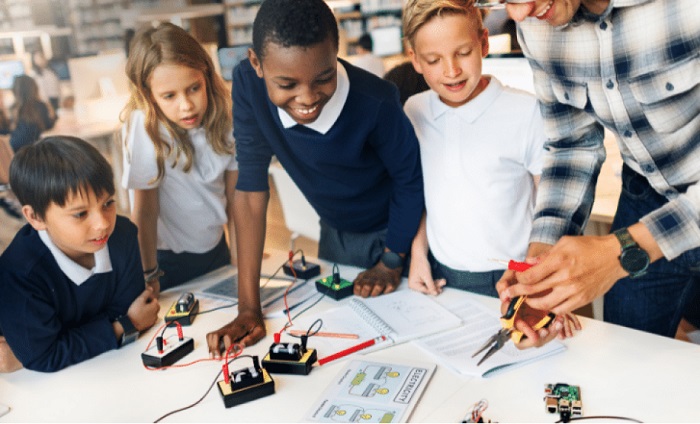
Project-Based Learning Frameworks: Replacing rote worksheets with multifaceted, open-ended community challenges—such as designing a sustainable urban garden or modeling regional water usage—demands that students draw upon biology, mathematics, graphic design, and sociology simultaneously.
-
Teaching the Value of Disciplinary Constraints: Unchecked freedom often paralyzes creative momentum. Setting deliberate, rigorous boundaries—such as requiring an engineering team to use only recycled materials or asking a history student to explain the Cold War from a singular perspective—forces the mind to find inventive solutions within clear borders.
-
Socratic Dialogue and Inquiry-Based Questioning: Moving away from passive lecture formats and toward dialectical inquiry trains students to interrogate assumptions, defend novel interpretations, and explore complex issues from multiple perspectives.
When schools and universities integrate these practices, they transform students from passive consumers of prepackaged knowledge into active, self-directed knowledge creators.
Transforming the Modern Workplace Through Integrated Creative Culture
The need for cross-disciplinary creativity extends far beyond the academic classroom; it is equally vital in modern organizational leadership. Forward-thinking enterprises understand that continuous operational optimization has limits. An organization cannot simply cut costs or refine workflows to achieve long-term relevance; it must generate new offerings, explore unexpected business models, and adapt to rapidly evolving consumer behaviors.
Building a truly creative organizational culture requires breaking down corporate silos. Cross-functional collaboration—pairing software engineers directly with graphic designers, supply chain coordinators, and customer service teams—ensures that problems are evaluated from diverse perspectives.
Furthermore, organizations must create psychological safety, ensuring that employees can pitch unconventional concepts, question executive assumptions, and challenge long-standing practices without fear of career penalties.
When creativity is recognized as a daily professional requirement for every team member, from marketing to accounting, businesses build the agility necessary to thrive amid continuous market turbulence.
Frequently Asked Questions
Can creativity genuinely be taught and measured, or is it an innate personality trait?
Scientific research confirms that while individuals exhibit different natural inclinations toward creative thought, creativity is a cognitive capacity that can be systematically strengthened through instruction and practice. Pedagogical frameworks such as design thinking, creative problem-solving exercises, and divergent questioning routines measurably improve an individual fluency, flexibility, and originality of thought. Assessing creativity does not mean subjectively grading individual taste; it involves measuring a student ability to generate multiple viable approaches to an open-ended problem, explore alternative assumptions, and synthesize disparate information into a functional solution.
How does the current focus on standardized testing affect the development of creative thinking?
High-stakes standardized testing models often prioritize convergent thinking over divergent exploration. Because standardized tests typically evaluate knowledge through multiple-choice questions or formulaic rubrics with a single correct answer, they train students to search for the expected response rather than exploring alternative possibilities. This testing environment conditions students to view intellectual mistakes as failures rather than valuable learning steps. When testing dominates educational priorities, teachers face institutional pressure to eliminate open-ended projects, classroom discussions, and interdisciplinary inquiries to maximize test-prep drills.
What is the mechanical difference between divergent thinking and convergent thinking?
Divergent thinking is an expansive cognitive process where the mind moves outward in multiple directions to generate a wide variety of possibilities, unexpected connections, and unconventional ideas without immediate self-censorship. Convergent thinking is a focused cognitive process where the mind takes those various possibilities and applies analytical logic, critical judgment, and practical constraints to select, refine, and execute the single best solution. True innovation requires cycling fluidly between both modes: divergent thinking generates the raw options, while convergent thinking shapes them into viable reality.
Why do some people believe that technical proficiency must always precede creative expression?
The belief that technical mastery must fully precede creative expression stems from traditional craft apprenticeships, where students spent years executing repetitive technical exercises before being permitted to design original works. While having a baseline foundation of technical skills is undoubtedly necessary to execute complex ideas effectively, separating technical skill from creative application can extinguish early curiosity. Modern pedagogical models show that learning technical skills through active, creative experimentation—such as writing original code while learning syntax, or composing simple musical phrases while learning scales—produces deeper conceptual understanding and sustained motivation.
How does the psychological concept of intellectual safety influence creative problem solving?
Psychological safety is the shared belief held by members of a team or classroom that the group is safe for interpersonal risk-taking. Creativity requires vulnerability; proposing a radical, unproven concept or questioning an established process exposes an individual to potential ridicule, criticism, or failure. When psychological safety is low, people censor themselves and default to safe, conventional answers to protect their social standing. When psychological safety is high, individuals voice unconventional hypotheses, share incomplete ideas, and dissect mistakes openly, creating the collaborative environment required for breakthrough discoveries.
What specific daily habits can an adult practice to foster personal cross-disciplinary creativity?
Adults can strengthen their creative faculties by intentionally diversifying their intellectual inputs and disrupting habitual routines. Practical daily habits include reading publications outside of their primary career field, learning the fundamental principles of an unfamiliar domain such as astronomy, architecture, or music theory, and practicing manual handwriting or sketching to stimulate visual-spatial cognition. Additionally, cultivating curiosity by asking open-ended questions during routine conversations, visiting spaces like natural history museums or manufacturing floors, and keeping an organized personal journal to capture fleeting observations builds the cognitive habit of connecting disparate ideas.
How does encouraging creativity across non-artistic subjects benefit students with learning differences?
Traditional instructional models heavily emphasize sequential, language-heavy, and rote-memorization tasks that can disadvantage students navigating dyslexia, attention deficit conditions, or other neurodivergent profiles. Integrating creative, multimodal problem-solving into subjects like mathematics and history provides alternate entry points for these learners. Students with strong visual-spatial reasoning, mechanical intuition, or out-of-the-box conceptual thinking can demonstrate their deep comprehension through hands-on modeling, interactive debates, visual mapping, and functional design, turning perceived academic deficits into creative strengths.
Comments are closed.